
Ministry of Labour Discussed the Results of the Digital Employment Study in Kyrgyzstan
The Ministry of Labour, Social Security and Migration of the Kyrgyz Republic held a roundtable discussion on the findings of a study examining new forms of digital employment and digital professions in Kyrgyzstan. The event brought together representatives of government agencies, employers, international organizations, and experts to discuss the regulation of digital work, social protection, skills development, and the formalization of emerging forms of employment.
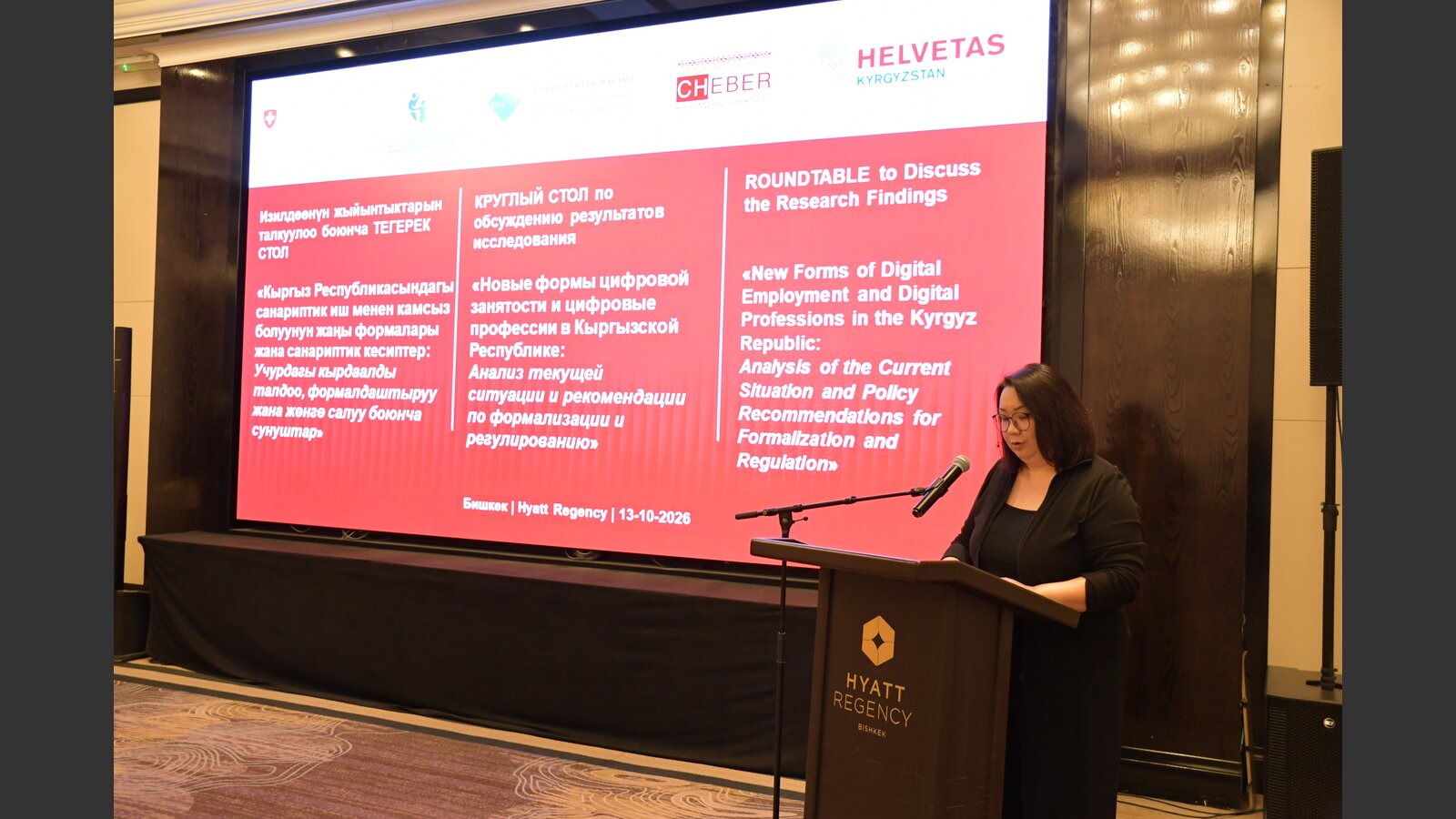
On 13 October 2026, the Ministry of Labour, Social Security and Migration of the Kyrgyz Republic held a roundtable discussion in Bishkek to review the findings of the study “New Forms of Digital Employment and Digital Professions in the Kyrgyz Republic: Analysis of the Current Situation and Recommendations for Formalization and Regulation.”
The study was conducted by a team from the University of Central Asia as part of the Ministry’s cooperation with the Cheber: Skills Development in Kyrgyzstan project, funded by the Government of Switzerland and implemented by Helvetas Swiss Intercooperation in the Kyrgyz Republic.
During the event, participants noted that the development of digital technologies is transforming the labour market and creating new employment opportunities. At the same time, important issues arise regarding the legal status of freelancers and digital platform workers, their access to social and labour protections, registration, and taxation. Participants also emphasized that new forms of work require modern skills and accessible opportunities for training and reskilling.
The roundtable aimed to discuss the study findings and practical recommendations for the development, formalization, and regulation of digital employment with the participation of representatives of government agencies, employers, international organizations, and the expert community.
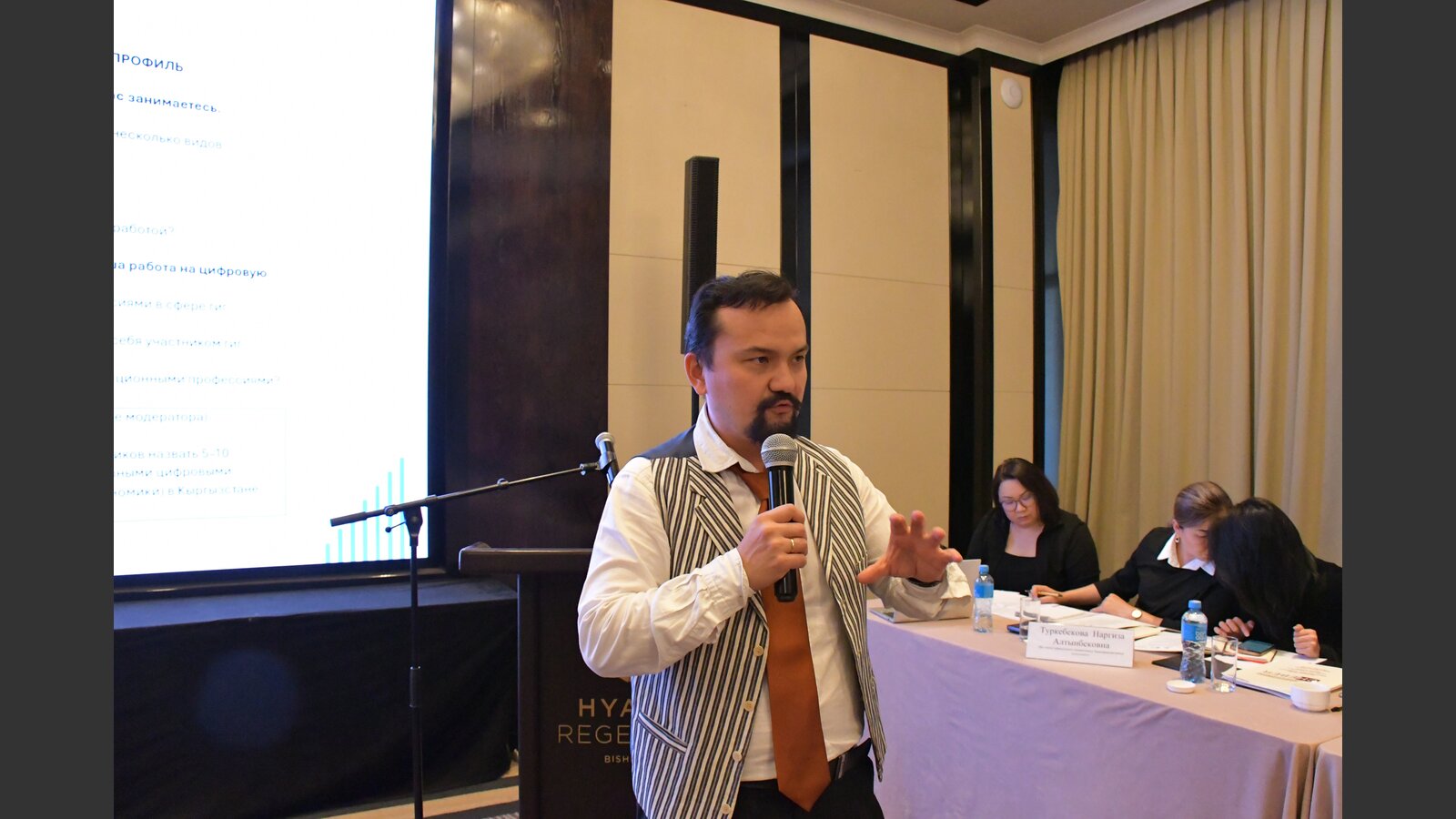
Researchers from the University of Central Asia presented an analysis of new forms of employment and digital professions, working conditions and income levels, as well as legal and institutional barriers. Participants examined issues related to social protection, regulation of digital platforms, gender aspects, the situation of vulnerable groups, and relevant international experience.
Special attention was given to skills development, including upskilling and reskilling opportunities, formal and non-formal education pathways, recognition of qualifications, and career guidance. Participants discussed the roles of the government, educational institutions, employers, digital platforms, and workers themselves in addressing these challenges.
As a result of the discussion, priority areas for further work and next steps were identified. The study findings will be used to develop recommendations for improving state policy in the areas of employment and skills development, as well as proposals for the formalization of new professions and forms of employment within the framework of drafting a new Law on Employment.